




NRIs handle documents across two countries, sometimes three. A birth certificate issued in India might need to work in the UK. A marriage certificate from the US might need recognition in India. Somewhere in that process, two very different terms keep coming up: Apostille vs Certified Translation
Many NRIs assume these mean the same thing. They don’t. Confusing them causes rejected applications, wasted fees, and frustrating delays. Here’s exactly what each one does, and when you need both.
What Is an Apostille?
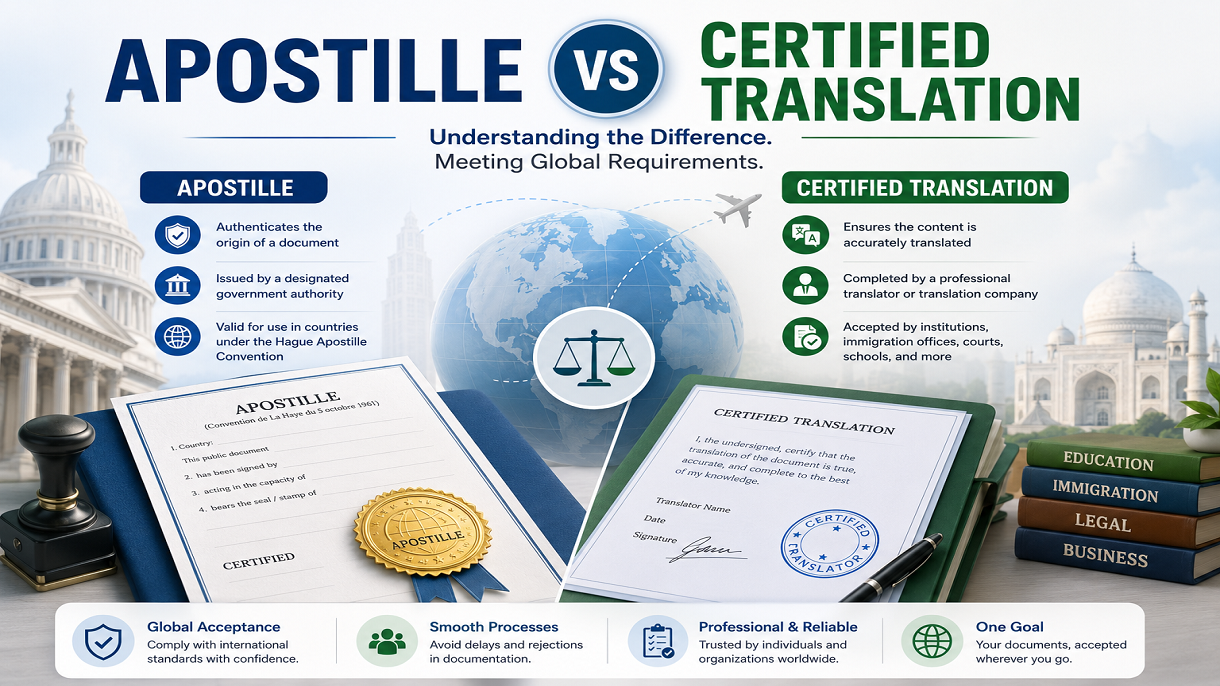
An apostille verifies that a document is genuine and issued by a legitimate authority. It doesn’t translate anything. It authenticates the original document so another country’s government recognizes it as legally valid.
Countries that signed the Hague Apostille Convention accept apostilled documents without further legalization. India joined this convention, so an apostille from the Indian government works directly in other member countries like the US, UK, most of the EU, and Australia.
Common documents that need apostille include birth certificates, marriage certificates, educational degrees, and power of attorney documents. The Ministry of External Affairs handles apostille services in India, often through regional passport offices or authorized agencies.
What Is a Certified Translation?
A certified translation converts a document from one language into another, accompanied by a signed statement from the translator confirming accuracy and completeness. It doesn’t authenticate the original document. It only ensures the translated text faithfully represents the source content.
Universities, immigration offices, and courts commonly require certified translations when a document isn’t already in the destination country’s official language. A Hindi birth certificate submitted to a US immigration office, for example, needs certified translation into English before anyone reviews it.
The Key Difference
Apostille confirms a document is authentic. Certified translation confirms the language conversion is accurate. These serve entirely different purposes, and most cross-border processes require both, not one or the other.
Think of it this way: apostille proves the document itself is real. Certified translation makes sure the content is understandable and trustworthy in the new language.
When NRIs Need Both
Many real-world scenarios require Apostille vs Certified Translation together. A marriage certificate issued in India, needed for a US spouse visa application, typically needs an apostille from Indian authorities first, followed by a certified English translation if the original isn’t in English.
Educational credentials work similarly. An Indian degree certificate submitted for foreign university recognition or professional licensing often needs apostille for authentication, plus certified translation if the receiving country doesn’t accept Hindi, Tamil, or other regional-language documents.
Property and legal documents follow the same pattern. Power of attorney documents, court orders, and property deeds frequently require both steps before another country’s authorities accept them.
Order Matters
Get the apostille first, then the certified translation. Translators typically need to reference the apostille stamp or certificate in their translated version, noting its presence and details. Reversing the order can force you to redo the translation after apostille completion, wasting both time and money.
Common Mistakes NRIs Make
Many NRIs assume a certified translation alone satisfies foreign document requirements, only to have their application rejected for missing authentication. Others get an apostille and assume that covers language requirements too, not realizing the receiving institution still needs an English or destination-language translation.
A few also confuse apostille with notarization. Notarization verifies a signature or copy locally. Apostille authenticates the document for international use. They aren’t interchangeable, and using the wrong one delays your process significantly.
Countries That Don’t Accept Apostille
Not every country participates in the Hague Convention. If your destination country isn’t a member, you’ll need document legalization through the country’s embassy instead, a longer process involving both the Ministry of External Affairs and the receiving country’s consulate.
Check your destination country’s status before starting. This single step saves significant time, since legalization and apostille follow completely different procedures.
Final Thoughts
Apostille and certified translation solve two separate problems: authenticity and language. Most NRI applications involving foreign institutions need both, completed in the correct order, with certified translators experienced in handling apostilled documents.
Confirm exact requirements with your specific university, immigration office, or institution before starting. Requirements vary by country and by purpose, and getting this step right the first time avoids costly delays.
Need certified translation for your apostilled documents? Lingo Chaps helps NRIs get accurate, accepted translations for birth certificates, degrees, marriage certificates, and more — done right, the first time.


0 Comments